Biomimicry
Fighting microorganisms through the strangest way
Most marine mammals like whales have barnacles or algae growing on them, but sharks don't. Under a microscope the skin scales of sharks are streamlined with ridges, this prevents invasive organisms and bacteria from growing or latching on. This concept was turned into a micropattern, called Sharklet, first developed by Dr. Tony Brennan at the University of Florida and was sent around the nation to control bacteria and other microorganisms.
Originally in 2002, this technology was made to prevent algae and barnacles from growing on the hulls of ships and was developed by Dr. Anthony Brennan who was a Materials Science and Engineering professor at the University of Florida. As the surface was being developed, he began to realize other potential uses. Contamination is a large concern for hospitals, it can be lethal for patients. The "Sharklet" material surface proved successful by preventing microorganisms from creating a biofilm. By using this for operations, bacteria will be contained and unable to form colonies that could contaminate surfaces in operations.
This potential has been exploited to create "Sharklet Technologies, Inc." It modifies traditional hospital technologies by making the environment more sterile. Funding and initial research were a challenge while the material was still in development but now it has more interest and funding. This application of this technology is available now, the next step is to create a way to mass produce the material to get it into hospitals.
What if we didn't have to worry about superbugs?
Sappi North America collaborates with Sharklet Technologies, Inc. to create a revolutionary casting and release paper product line
09.12.2016
Sharklet mentioned in Biomimicry TED Talk
05.20.2016
Current Events About Sharklet Technologly
Sharklet in The Atlantic
02.08.2016
Video Reports on Sharklet Technology
The Discovery Channel had noticed the new technology and had created a short about it that centered more around the original purpose of its creation.
The technology of Sharklet caught the attention of PBS and the video above is their take on the benefits this new technology can bring.
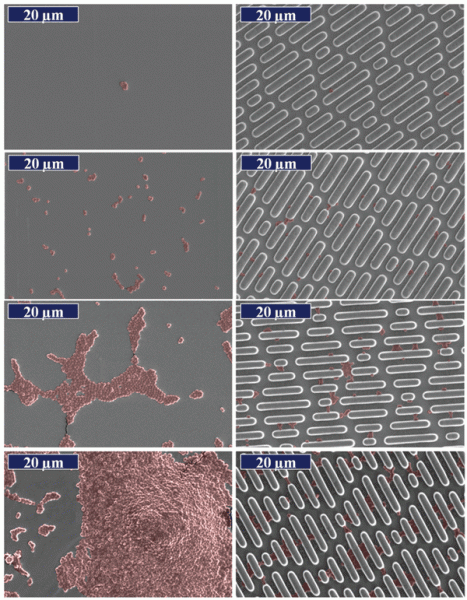
The image above shows bacterial growth on a flat surface versus the Sharklet Surface
Source A-1
"Gainesville-based innovation catches the attention of CBS Sunday Morning. Sharklet™ is the world's first technology to inhibit bacterial growth through pattern alone"
Interview at the 2013 Rocky Mountain Life Science Investor & Partnering Conference in Denver. Video production by Robin Bond Media - http://robinbondmedia.com
The Safety Behind Bacteria Isolation
As described in this TED Talk, bacteria will communicate with signal molecules and receptor proteins. Bacteria will lie dormant and detect population changes by sending specific molecules that are unique to that species. When the bacteria detect their population has reached a certain size they launch a pathogenic attack which makes us sick. Isolating bacteria prevents them from receiving enough signal molecules to switch from dormant to pathogenic.